
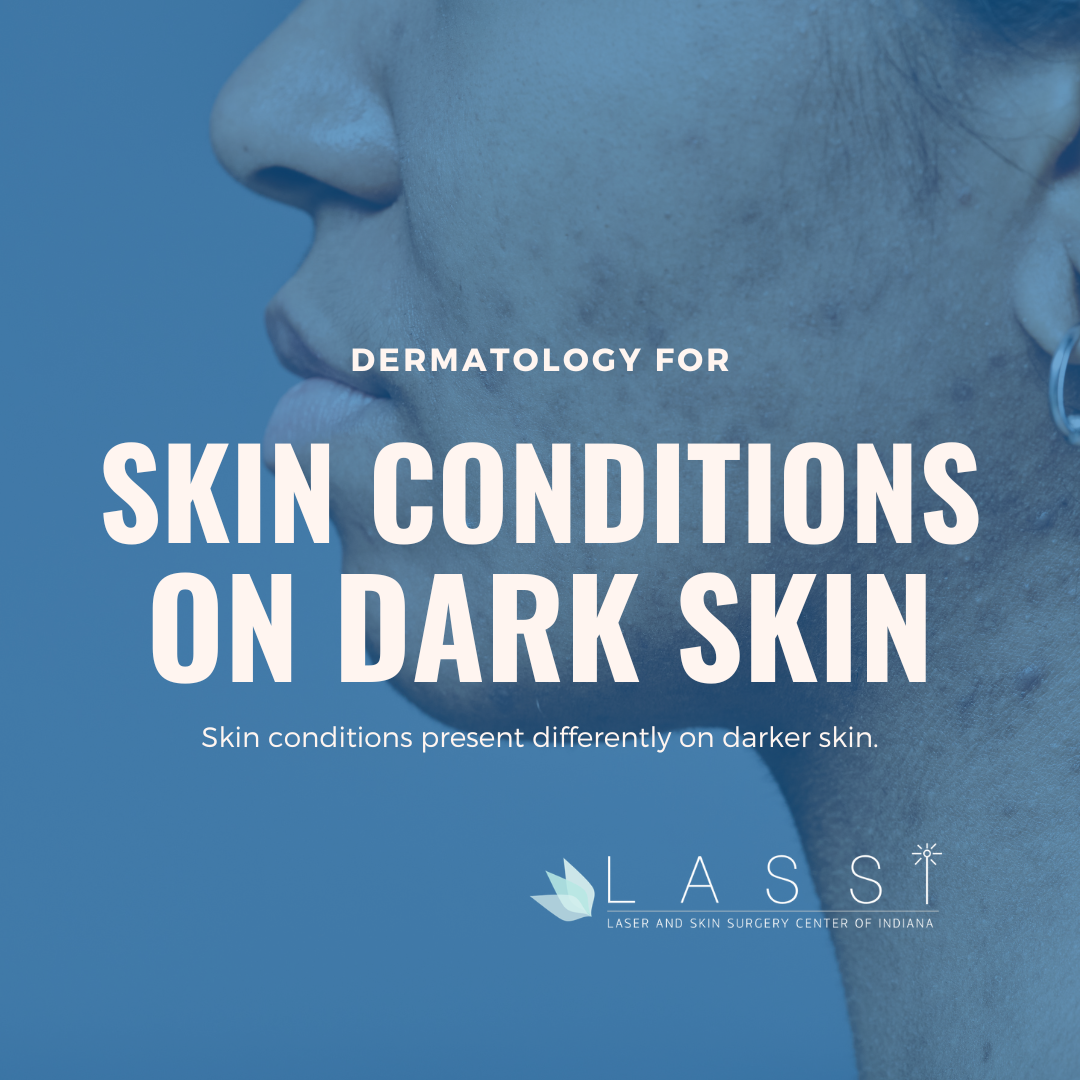
Skin Conditions on Dark Skin
How Dark Skin Types Present Dermatologic Conditions Differently, and What To Do About It
One size does not fit all in terms of skin health, and people with dark skin often experience and present common skin conditions differently than those with lighter (Caucasian) skin. Despite this, many educational resources and clinical images have historically focused on lighter skin tones, making accurate self-recognition and early diagnosis more challenging for individuals with darker complexions.
Understanding how dermatologic conditions appear on dark skin can help prevent delayed treatment, unnecessary scarring, and long-term pigmentation changes.
Here’s what our dermatology providers in Indianapolis want you to know if you have dark skin.
Why Skin Tone Matters in Dermatology
Melanin, the pigment that gives skin its color, plays a central role in how skin conditions appear and behave. While all skin tones are susceptible to acne, eczema, psoriasis, and even skin cancer, inflammation often looks different on dark skin.
Redness, a hallmark of inflammation, may appear subtle, brown, purple, or gray instead of bright red in darker skin tones. This variation can make certain conditions more difficult to detect without proper training and experience in skin of color.
Additionally, dark skin has a higher tendency toward pigment alteration after inflammation. This means that even mild rashes or acne can leave behind dark marks that persist long after the initial condition resolves.
Acne and Post-Inflammatory Hyperpigmentation (PIH)
Acne affects all ethnicities, but individuals with dark skin frequently experience post-inflammatory hyperpigmentation (PIH) after breakouts heal.
On lighter skin, acne typically leaves temporary pink or red marks. On dark skin, however, inflammation often triggers increased melanin production, resulting in:
- Dark brown or black spots
- Uneven skin tone
- Long-lasting discoloration
Medical guidance emphasizes early acne treatment to reduce inflammation and minimize pigment changes.
To reduce acne-related hyperpigmentation:
- Treat acne early and consistently
- Avoid picking or squeezing lesions
- Use sunscreen daily to prevent dark spots from worsening
- Seek professional treatment for stubborn discoloration
Early dermatologic care can significantly reduce long-term pigment complications.
Eczema (Atopic Dermatitis) on Dark Skin
Eczema is commonly described as a red, itchy rash, but on dark skin, redness may not be visible.
Instead, eczema may appear as:
- Brown, purple, or gray patches
- Thickened, rough skin
- Small raised bumps around hair follicles
- Severe itching
Eczema can be more persistent and sometimes more severe in people with more melanin.
Without appropriate care, eczema flares may lead to significant darkening or lightening of the affected areas. Prompt treatment helps prevent chronic pigment changes.
Pseudofolliculitis Barbae (Razor Bumps)
Razor bumps are particularly common in individuals with tightly curled hair, which is more prevalent among men with dark skin. Known medically as pseudofolliculitis barbae, this condition occurs when shaved hairs curve back into the skin.
On lighter skin, razor bumps typically appear red. On dark skin, they often present as:
- Dark brown or hyperpigmented bumps
- Persistent marks after inflammation subsides
- Possible keloid-like scarring in severe cases
Untreated razor bumps can worsen and lead to permanent discoloration.
Proper shaving techniques, prescription topicals, and, in some cases, laser hair reduction may help minimize recurrence.
Keloids: Raised Scars More Common in Dark Skin
Keloids are thick, raised scars that extend beyond the original wound. They are significantly more common in people with dark skin.
Unlike typical scars, keloids:
- Continue to grow
- May itch or feel tender
- Do not resolve on their own
Keloids may develop after acne, surgery, burns, or piercings.
Treatment options include steroid injections, silicone gel therapy, pressure therapy, and surgical removal, though recurrence is possible. Early intervention improves outcomes and may reduce long-term cosmetic concerns.
Melasma and Other Pigment Disorders
Melasma causes brown or gray-brown patches on the cheeks, forehead, nose, and upper lip. While it affects many skin tones, melasma can be especially noticeable on dark skin due to contrast.
Melasma is hormonally influenced and often triggered by sun exposure.
Other pigment conditions include:
- Post-inflammatory hyperpigmentation
- Hypopigmentation (light spots after inflammation)
- Vitiligo
In dark skin, pigment disorders often have a stronger visual contrast, making professional evaluation essential to determine the correct diagnosis and safest treatment.
Psoriasis on Dark Skin
Psoriasis is typically described as red plaques with silvery scale. On dark skin, those plaques may appear:
- Dark brown
- Purple
- Grayish
Psoriasis may be underdiagnosed in patients with darker skin because it does not match textbook “red” descriptions.
Delayed diagnosis can lead to prolonged discomfort and greater pigment alteration after flares resolve.
Rosacea and Seborrheic Dermatitis
Rosacea is often associated with facial redness and flushing. In dark skin, redness may be subtle or absent. Instead, patients may experience:
- Warmth or burning sensations
- Acne-like bumps
- Darkened facial patches
Similarly, seborrheic dermatitis may appear pink, purple, or lighter than the surrounding skin rather than red.
Because these inflammatory conditions present differently in dark skin, individuals who experience persistent facial irritation should seek evaluation rather than assuming it is acne or simple sensitivity.
Skin Cancer in Dark Skin
Although skin cancer is less common in individuals with black and brown skin due to higher melanin levels, it is often diagnosed at later stages.
Certain forms, including acral lentiginous melanoma, may appear on the palms, soles, or under the nails in darker skin tones.
Warning signs may include:
- Dark streaks under nails
- Non-healing sores
- New or changing dark patches
- Lesions on non-sun-exposed areas
Regular skin checks are important regardless of skin tone.
Why Indianapolis Residents with Dark Skin Should Seek Specialized Care
In Indianapolis and throughout Central Indiana, individuals with dark skin benefit from dermatologic care that recognizes the nuances of skin of color.
Accurate diagnosis can mean:
- Preventing long-term hyperpigmentation
- Reducing keloid formation
- Managing chronic inflammatory diseases effectively
- Detecting skin cancer earlier
Not all skin conditions look the same across skin tones. Choosing a board-certified dermatologist familiar with black and brown skin presentations ensures more precise treatment plans and better cosmetic outcomes.
When to Schedule a Dermatology Appointment
Consider a professional evaluation if you experience:
- Persistent dark spots after acne or rashes
- Itchy or scaly patches that do not improve
- Raised scars that continue to grow
- Facial irritation with discoloration
- Any new or changing lesion
Early diagnosis is especially important for minimizing pigment changes and preventing complications.
Be sure to schedule annual skin checks with a dermatologist.
Final Thoughts on Protecting Dark Skin
Understanding how common conditions present on dark skin empowers patients to seek timely, appropriate care. Inflammation may not appear red. Pigment changes may last longer. Scarring risks may be higher.
Recognizing these differences and consulting with an experienced dermatologist can make a meaningful difference in both medical and cosmetic outcomes.
Healthy skin begins with accurate information — and personalized care that respects the unique biology of dark skin.
