

Sun Safety vs Sunscreen Myths
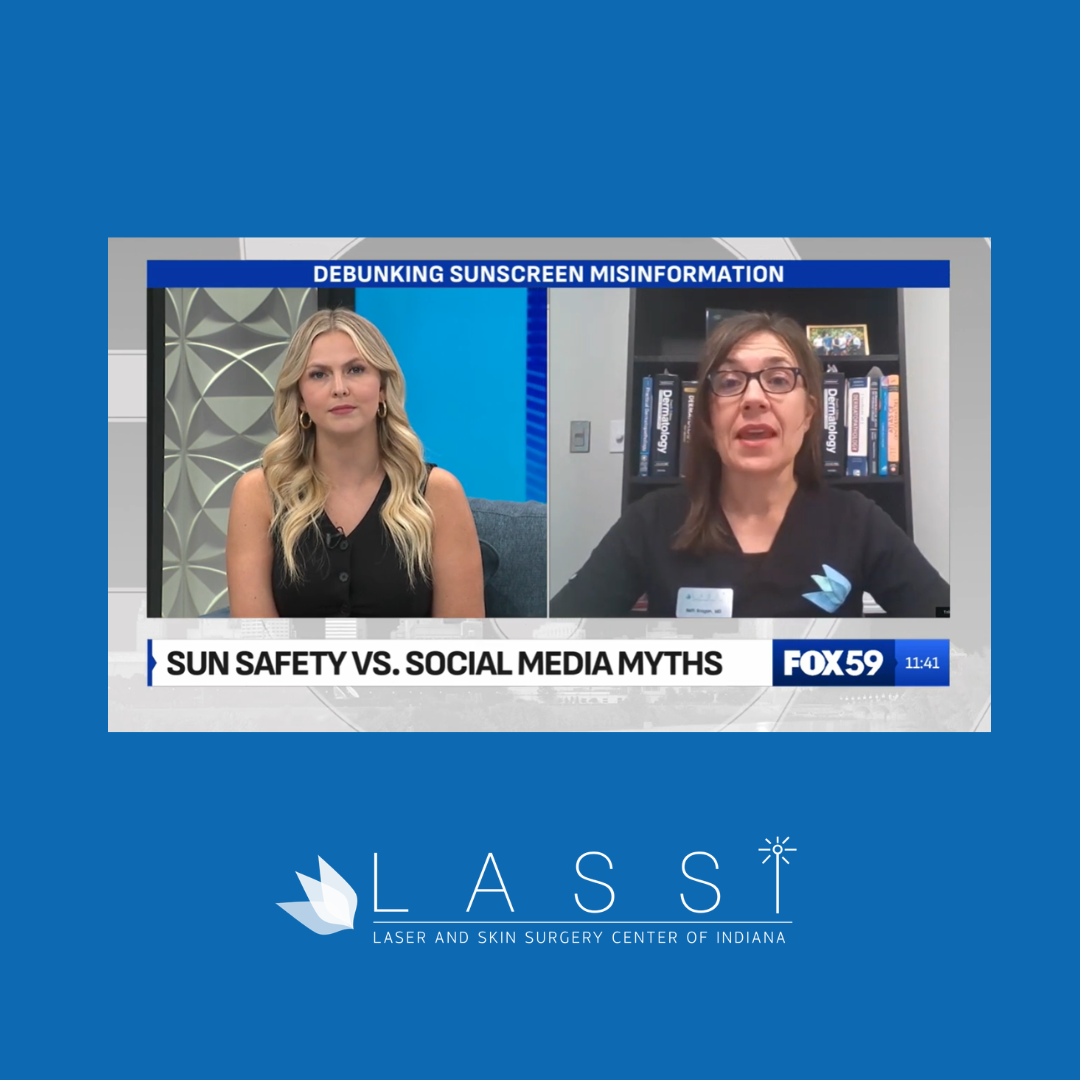
Dr. Beth Brogan Tackles Sun Safety vs. Social Media Myths About Sunscreen on FOX59 Morning News
Dr. Beth Brogan from the Laser and Skin Surgery Center of Indiana (LASSI) recently appeared on FOX59 Morning News in Indianapolis to address the growing problem of sunscreen misinformation spreading on social media. The segment focused on dangerous sunscreen myths circulating on TikTok that are reaching millions of people and potentially undermining critical sun protection habits.
Sunscreen Myths on Social Media
A new study from PLOS Digital Health reveals that sunscreen misinformation makes up six percent of all sunscreen-related content on TikTok. While that might sound like a small percentage, it translates to reaching over 100 million people. More concerning: misinformation gets disproportionate engagement. False claims about sunscreen are attention-grabbing, generate curiosity, and rack up likes, clicks, and shares, often outpacing accurate scientific information.
As Dr. Brogan explained during the interview:
“The problem with misinformation is because it is so attention-grabbing, it really calls in a lot more people than the actual true information does.”
Skin Cancer Risks Associated with Sunscreen Misinformation
UV exposure without sunscreen causes approximately 90 percent of the skin cancers dermatologists see in clinic every day. Misinformation about sunscreen safety isn’t just a nuisance, it’s potentially deadly.
Sunscreen Myths vs. The Facts
Myth #1: Sunscreen Causes Skin Cancer
The Fact: There is no scientific evidence to support this claim. Sunscreen has been shown in multiple studies to prevent skin cancer, including melanoma, basal cell carcinoma, and squamous cell carcinoma.
Myth #2: Sunscreen Blocks Vitamin D Production
The Fact: Yes, we do get some vitamin D from sun exposure. However, when protecting your skin from harmful UV rays, you can easily get sufficient vitamin D from other sources. There are plenty of easy ways to obtain vitamin D through foods and supplements. If you’re concerned about vitamin D levels, talk to your doctor or consider taking a supplement. No need to sacrifice skin protection.
Myth #3: Chemicals in Sunscreen Are More Dangerous Than Sun Exposure
The Fact: Parents and consumers worried about chemical sunscreens have safe alternatives. Mineral sunblocks containing titanium dioxide and zinc oxide are chemical-free options that work effectively. The technology has improved significantly in recent years, making these mineral blocks less pasty and white while maintaining necessary protection from sun damage.
That said, the chemical sunblocks available in the United States are extraordinarily safe and are considered much safer than going unprotected in the sun.
SPF Guidelines from a Dermatologist
During the segment, Dr. Brogan also provided practical guidance on selecting and using sunscreen correctly:
Minimum SPF: At least SPF 30
Critical Feature: Look for broad spectrum protection that covers both UVA and UVB rays. Most SPF 30 products offer this, but always check the label.
Application Amount: Use more than you think you need. The recommended amount is one ounce (about a shot glass full) to cover your entire body.
Timing: Apply 30 minutes before sun exposure.
Reapplication: Every two hours while in the sun. If you’re swimming or sweating, reapply more frequently.
Where to Find Trusted Information
If you want reliable information about sun safety and skin cancer prevention, Dr. Brogan recommends:
- Skin Cancer Foundation (skincancer.org) – Comprehensive, evidence-based resources
- Board-certified dermatologists – Your local skin expert can answer specific questions
- Your regular healthcare provider – A trusted starting point for any health concerns
The Bottom Line: Sunscreen Prevents Skin Cancer
Sunscreen is safe, effective, and one of the most important tools in preventing skin cancer. Don’t let social media myths derail your sun protection routine. Whether you choose chemical or mineral formulations, the key is consistent, proper application and trusting the science, not the algorithm.
Looking for a Dermatologist in Indianapolis?
Contact us to schedule an appointment with one of our dermatology providers in Indianapolis at the Laser and Skin Surgery Center of Indiana.
